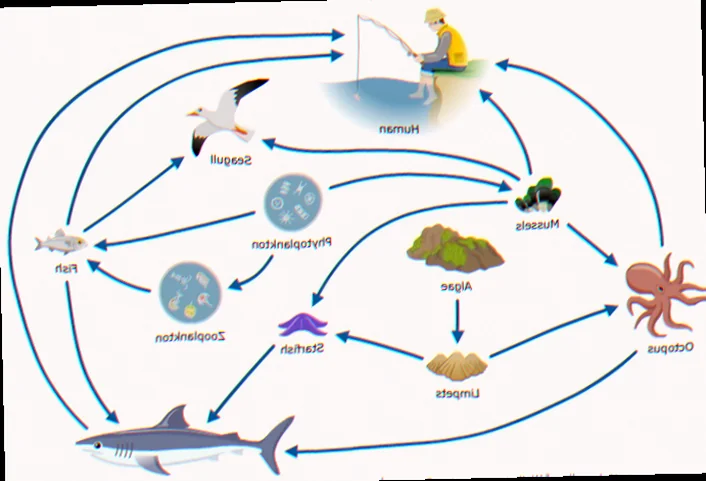
Ecological significance: Australian plankton, a diverse assemblage of microscopic organisms spanning both phytoplankton (primary producers) and zooplankton (primary consumers and higher), forms the irreplaceable foundation of nearly all marine food webs. Occupying the lowest trophic levels, they convert solar energy and inorganic nutrients into biomass, driving nutrient cycling and oxygen production across vast oceanic ecosystems. Without plankton, the intricate web of marine life, from small fish to apex predators like whales, would experience catastrophic collapse, profoundly altering global biogeochemical cycles and rendering our oceans barren.
Species Profile
| Attribute | Data |
|---|---|
| Scientific name (representative groups) | Phytoplankton: Coscinodiscus centralis Ehrenberg, 1841 (a diatom). Zooplankton: Acartia danae Giesbrecht, 1889 (a copepod). |
| Trophic level | Primary producer (phytoplankton), Herbivore (herbivorous zooplankton), Omnivore (omnivorous zooplankton), sometimes Secondary Consumer (carnivorous zooplankton). |
| Population estimate | In Australian waters, phytoplankton biomass can be estimated via chlorophyll-a concentration, which varies significantly but often ranges from 0.1 to >10 µg L⁻¹ in surface waters. Zooplankton densities can range from hundreds to tens of thousands of individuals per cubic metre (e.g., copepod densities of ~2,000-5,000 individuals m⁻³ in productive coastal areas, dropping to <100 m⁻³ in oligotrophic offshore waters). |
| Native range | All Australian marine waters, encompassing coastal, shelf, and oceanic environments, from tropical northern waters to the temperate south and Antarctic regions. This includes numerous Commonwealth marine reserves and bioregions such as the Great Barrier Reef, Ningaloo, and the Southern Ocean. |
| EPBC Act status | Not listed (as "plankton" represents a vast, diverse, and foundational group, not a single species or threatened taxon under the Act). |
Position in the Food Web
- Prey species: Phytoplankton, through photosynthesis, consume dissolved inorganic nutrients (nitrates, phosphates, silicates) and carbon dioxide from the water column, converting them into organic matter. Herbivorous zooplankton primarily graze on phytoplankton, bacteria, and detritus, employing filter-feeding or direct interception methods. Omnivorous zooplankton exhibit broader diets, consuming smaller zooplankton and protists in addition to phytoplankton.
- Predators: Australian plankton are a critical food source for an immense array of marine organisms. Specific examples include the larvae of commercially important fish species like the Australian Anchovy (Engraulis australis), juvenile and adult small pelagic fish (e.g., Australian Sardine, Sardinops sagax), numerous species of jellyfish (medusae), comb jellies (ctenophores), and larger zooplankton such as chaetognaths (arrow worms). Filter-feeding baleen whales, notably the Humpback Whale (Megaptera novaeangliae) and Southern Right Whale (Eubalaena australis) that frequent Australian waters, consume vast quantities of krill and copepods, which are dominant forms of zooplankton.
- Competitors: Within the phytoplankton community, different species compete intensely for limiting resources such as light, nitrate, phosphate, and silicate. For instance, diatoms and dinoflagellates often compete for available nutrients, with environmental conditions dictating the dominant group. Zooplankton species compete for available phytoplankton biomass and other food resources. For example, various copepod species in a given water mass might vie for the same size fraction of diatoms or dinoflagellates.
- Symbiotic partners: Some planktonic organisms engage in fascinating symbiotic relationships. Foraminifera and radiolarians, single-celled zooplankton, often host symbiotic algae (dinoflagellates or diatoms) within their cells or shells. This is a mutualistic relationship, where the algae provide photosynthetic products to the host, and the host offers protection and access to nutrients. Conversely, plankton can also be hosts to parasites; for instance, certain fungi or ciliates are known to parasitize diatoms and copepods, respectively, acting as mortality agents.
- Keystone role: Australian plankton collectively represent an unequivocal keystone group within marine ecosystems. Their collective biomass and high turnover rates underpin almost all marine food webs, facilitating energy transfer from the sun to higher trophic levels. Without plankton, the entire trophic structure would collapse, demonstrating their critical role far beyond their relative abundance. They are also indicator species for ocean health due to their rapid response to environmental changes.
Habitat Requirements and Microhabitat Use
The habitat requirements for Australian plankton are incredibly diverse, reflecting the vast range of species and their ecological niches. Phytoplankton are fundamentally dependent on sufficient light penetration for photosynthesis, meaning they are concentrated in the euphotic zone (the upper layer of the ocean where sunlight penetrates). They also require a steady supply of dissolved inorganic nutrients (nitrate, phosphate, silicate, iron), which are often regenerated in surface waters or supplied by processes like upwelling, riverine runoff, or atmospheric deposition. Different phytoplankton groups thrive under specific nutrient ratios and light intensities; for example, diatoms flourish in high-silicate, turbulent waters, while dinoflagellates often dominate in stratified, nutrient-poor conditions. Zooplankton, in turn, are distributed throughout the water column, often exhibiting diel vertical migration - ascending to surface waters at night to feed and descending to deeper, darker waters during the day to avoid visual predators. Their distribution is closely tied to the availability of their prey (phytoplankton and smaller zooplankton) and temperature and salinity gradients. Coastal plankton communities in bioregions like the Great Barrier Reef lagoon or the temperate waters of the South-East Marine Region exhibit distinct characteristics influenced by proximity to land, nutrient input, and current systems, while oceanic communities in the Coral Sea or Southern Ocean are adapted to more oligotrophic or cold-water conditions, respectively. Microhabitat use can be highly specific, with some species preferring the very surface microlayer, others associated with marine snow aggregates, or distinct stratification layers within the water column.
Reproductive Strategy and Population Dynamics
Australian plankton predominantly employ an r-selected reproductive strategy, characterised by rapid growth rates, short generation times, and the production of a large number of offspring with minimal parental investment. Phytoplankton, such as diatoms and dinoflagellates, reproduce asexually through binary fission, with doubling times often measured in hours under optimal conditions. Zooplankton, like copepods, reproduce sexually, releasing numerous eggs that hatch into nauplii and develop through multiple larval stages. Breeding triggers are highly dependent on environmental cues, including sufficient light availability (for phytoplankton), nutrient pulses (often following upwelling events or rainfall runoff), and suitable water temperatures. The rapid population growth allows plankton communities to quickly capitalise on favourable conditions, leading to episodic blooms. However, juvenile survival rates are extremely low due to intense predation pressure, high physical dispersal, and susceptibility to environmental stressors. Population growth is primarily limited by the availability of essential nutrients (e.g., nitrogen, phosphorus, silicon, iron), light limitation (especially in turbid or deep waters), intense top-down control by predators, and viral lysis or parasitic infection, which can decimate bloom populations. The dynamic interplay between these factors drives the characteristic boom-and-bust cycles observed in plankton populations.
Threats and Vulnerability Analysis
- Introduced species pressure: While less direct than for sessile organisms, introduced marine species can indirectly impact Australian plankton. For instance, invasive jellyfish species, often transported via ballast water, can form large blooms that compete with native zooplankton for food or prey directly on fish larvae, altering trophic dynamics. Similarly, introduced bivalves can filter-feed extensively, changing phytoplankton community structure.
- Land-use change: Coastal land-use changes, particularly urbanisation, agriculture, and industrial development, pose significant threats. Increased nutrient runoff from agricultural fertilisers and sewage can lead to eutrophication, causing harmful algal blooms (HABs) dominated by specific, often toxic, phytoplankton species, disrupting the natural food web. Sediment runoff from land clearing can increase turbidity, limiting light penetration for phytoplankton. Coastal dredging operations can resuspend sediments and pollutants, negatively impacting plankton communities.
- Climate projections: Ocean warming is projected to increase ocean stratification, reducing the mixing that brings nutrient-rich deeper waters to the surface. This can lead to decreased primary productivity in many regions, particularly in oligotrophic open oceans, by 2050. Warmer temperatures can also alter species ranges, favouring warm-water species over cold-water adapted plankton. Ocean acidification, resulting from increased atmospheric CO2 absorption, poses a severe threat to calcifying plankton, such as coccolithophores, foraminifera, and pteropods. The reduced pH makes it harder for these organisms to form and maintain their calcium carbonate shells, impacting their survival and the