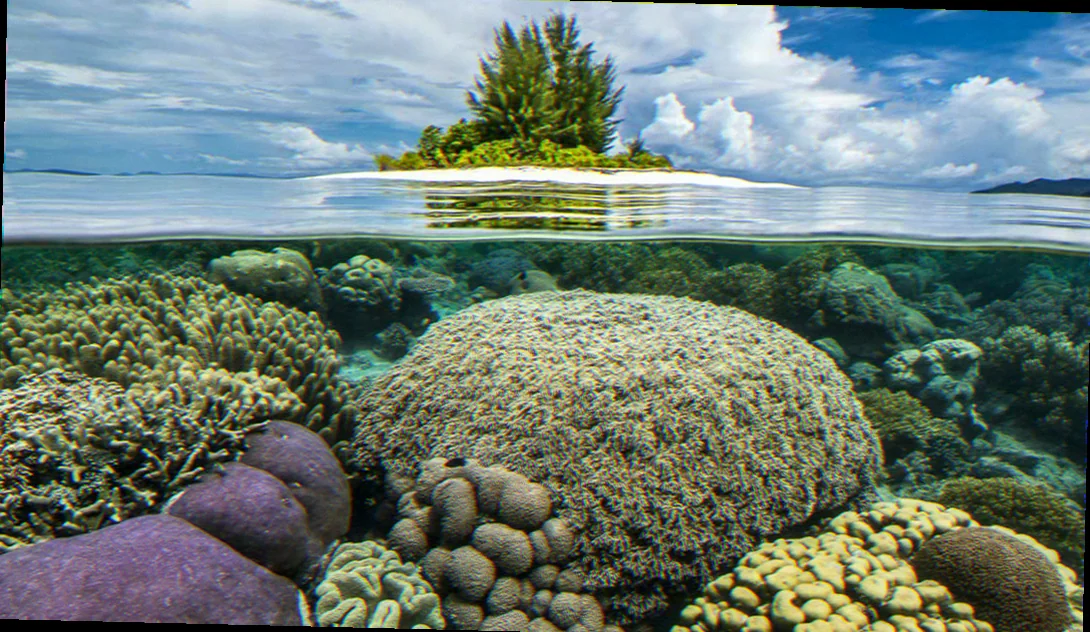
Ecological significance: The biodiversity of marine ecosystems in Australia represents a multi-trophic powerhouse that underpins the health of the Indo-Pacific and Southern Ocean biomes. These ecosystems facilitate critical nutrient cycling and carbon sequestration through complex interactions between primary producers like phytoplankton and apex predators like the Great White Shark. If this biodiversity were to significantly decline, the resulting trophic cascade would lead to the collapse of the continent's fisheries, the loss of coastal protection from storm surges, and a terminal disruption of the global carbon cycle.
Species Profile
| Attribute | Data |
|---|---|
| Scientific name | Assemblage of Australian Marine Biota (Various Phyla) |
| Trophic level | Multi-trophic (spanning Primary Producers to Apex Predators) |
| Population estimate | ~33% average hard coral cover in Northern/Central GBR (AIMS 2022) |
| Native range | All Australian States, Territories, and the Australian Fishing Zone (AFZ) |
| EPBC Act status | Varies; includes "Critically Endangered" (e.g., Grey Nurse Shark) to "Not Listed" |
Position in the Food Web
- Prey species: Marine biodiversity relies on a foundation of Phytoplankton and Zooplankton, which are consumed via filter-feeding by species ranging from the Whale Shark (Rhincodon typus) to the Sydney Rock Oyster (Saccostrea glomerata).
- Predators: Key predators that regulate these ecosystems include the Crown-of-thorns Starfish (Acanthaster planci), which preys on scleractinian corals, and the Great White Shark (Carcharodon carcharias), which regulates pinniped populations.
- Competitors: In temperate reefs, Macroalgae (such as Sargassum) frequently compete with Hard Corals for space and light, a process often mediated by herbivorous fish grazing.
- Symbiotic partners: A definitive mutualism exists between Scleractinian corals and photosynthetic dinoflagellates known as Zooxanthellae, where the coral provides shelter and the algae provide glucose via photosynthesis.
- Keystone role: Australian marine ecosystems feature multiple keystone species, most notably Heliocidaris erythrogramma (Purple Urchin) in kelp forests and various reef-building corals that provide the structural complexity necessary for thousands of other species.
Habitat Requirements and Microhabitat Use
The biodiversity of marine ecosystems in Australia is distributed across distinct bioregions, each requiring specific environmental parameters. In the Wet Tropics and Great Barrier Reef marine provinces, high solar irradiance and low-nutrient (oligotrophic) waters are essential for coral calcification. Conversely, the Great Southern Reef, stretching from New South Wales to Western Australia, relies on the nutrient-rich, cool-temperate waters of the Southern Ocean to support massive Giant Kelp (Macrocystis pyrifera) forests. Microhabitat use is highly specialized; for instance, the Leafy Seadragon (Phycodurus eques) requires the complex structural canopy of seagrass meadows in the South-west Corner bioregion for camouflage, while benthic infauna require specific sediment grain sizes in the soft-bottom habitats of the North-west Shelf.
Reproductive Strategy and Population Dynamics
Australian marine species employ a spectrum of reproductive strategies, though many structural species are K-selected, characterized by slow growth and late maturity. A hallmark of the Northern tropical ecosystems is the synchronous mass coral spawning, triggered by sea surface temperature increases and the lunar cycle, typically occurring in late spring or early summer. This "r-selected" event involves the release of millions of gametes to overwhelm predators and ensure larval dispersal. However, juvenile survival rates are exceptionally low due to pelagic predation and sensitivity to water quality. Population growth is fundamentally limited by "recruitment limitation"-the success of larvae settling on suitable substrate-and "resource limitation," particularly the availability of nitrogen and phosphorus in coral reef systems or light penetration in temperate kelp forests.
Threats and Vulnerability Analysis
- Introduced species pressure: The Northern Pacific Seastar (Asterias amurensis) has become a significant threat in Tasmanian and Victorian waters, predating heavily on native mollusks and outcompeting local species for benthic resources.
- Land-use change: Coastal development and agricultural runoff in the Burdekin and Fitzroy catchments lead to increased sedimentation and nutrient loading, which smothers coral recruits and promotes harmful algal blooms.
- Climate projections: By 2050, projected increases in sea surface temperatures (SST) are expected to cause more frequent and severe marine heatwaves. This poses a terminal threat to the Great Southern Reef, where the 1.5°C warming threshold could lead to the total loss of Macrocystis pyrifera in Tasmanian waters due to thermal stress.
- Disease: Pathogens such as the Serratia marcescens bacterium, often linked to poor water quality, contribute to white pox disease in corals, while the Abalone Viral Ganglioneuritis (AVG) has devastated wild abalone populations along the Victorian coastline.
Recovery Actions and Research Gaps
Current recovery actions are spearheaded by the Reef 2050 Long-Term Sustainability Plan, which focuses on improving water quality and crown-of-thorns starfish control. In temperate zones, the Operation Crayweed project is actively restoring Phyllospora comosa (Crayweed) forests along the Sydney coastline through underwater reforestation techniques. Despite these efforts, a critical research gap exists regarding the Mesophotic Coral Ecosystems (reefs at depths of 30-150 metres). Researchers currently lack sufficient data on the biodiversity of these deep-water refugia and their potential to act as "lifeboats" for shallow-water species migrating due to climate change.
Ecological FAQ
Why is Biodiversity of marine ecosystems australia important to its ecosystem?
Marine biodiversity performs the essential function of "ecosystem engineering." Hard corals and kelp provide three-dimensional complexity that serves as a nursery for roughly 25% of all marine life. Without this diversity, the ecosystem loses its functional redundancy, meaning the loss of a single species could lead to a total collapse of the food web and the cessation of bio-sequestration of atmospheric carbon dioxide.
How has the Biodiversity of marine ecosystems australia population changed over the last 50 years?
Over the last five decades, there has been a documented decline in the abundance of key structural species. The Great Barrier Reef has lost approximately 50% of its initial coral cover since the mid-1980s, primarily due to successive mass bleaching events, tropical cyclones, and crown-of-thorns starfish outbreaks. Similarly, 95% of Tasmania's giant kelp forests have vanished since the 1960s as the East Australian Current (EAC) pushes warmer, nutrient-poor water further south.
What can individuals do to support Biodiversity of marine ecosystems australia conservation?
Individuals can contribute by adhering to the Sustainable Seafood Guide (produced by the Australian Marine Conservation Society) to reduce pressure on overfished stocks. Additionally, reducing carbon footprints is the most direct way to mitigate the marine heatwaves that cause coral bleaching. Supporting local "citizen science" initiatives, such as ReefCheck Australia or Redmap, provides ecologists with vital data on species range shifts and reef health that would otherwise be impossible to collect.