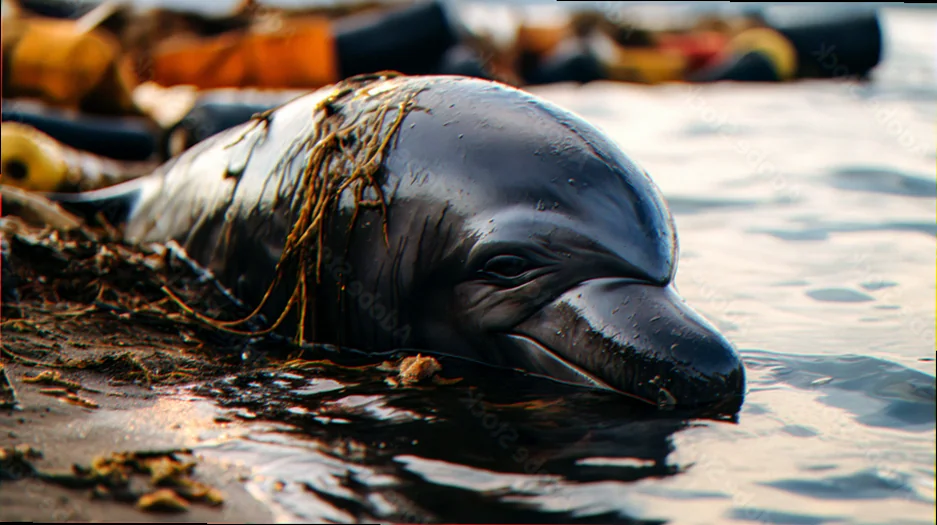
Field impression: The gentle swell of the Gippsland Lakes carries a faint, acrid tang, not of salt and kelp, but something metallic and industrial, a subtle counterpoint to the distant hum of a recreational boat. You scan the water, hoping for the familiar dark curve of a dolphin fin, but instead, your eye catches an iridescent sheen near the shore, a rainbow smear on the otherwise placid surface, a silent alarm bell in this vital coastal ecosystem.
How to Identify Indicators of Pollution Impact on Gippsland Dolphin Health
Observing the direct "impact" of pollution is about recognising a suite of physical and behavioural anomalies in dolphins and their immediate environment that deviate from healthy norms. This requires keen observation and a baseline understanding of healthy dolphin characteristics, particularly for the Burrunan Dolphin (Tursiops australis) and the Indo-Pacific Bottlenose Dolphin (Tursiops aduncus) found in Gippsland.
| Feature | What to Look For |
|---|---|
| Physical condition | Emaciation (visible rib-cage or sunken areas behind the blowhole), skin lesions (ulcers, rashes, necrotic patches), unusual growths or tumours (e.g., fibropapillomas), discoloured patches (e.g., pale, mottled, or jaundiced skin), visible entanglement scars or constrictions from fishing gear or debris. |
| Behavioural cues | Lethargy (reduced activity, prolonged resting at the surface), erratic or uncoordinated swimming, atypical surfacing patterns (e.g., shallow, rapid breathing; laboured breaths; unusually long dive times followed by quick, stressed surfacing), unusual solitary behaviour in typically social animals, avoidance of historically favoured feeding or resting areas, reduced play or social interaction. |
| Size of anomalies | Measureable lesions (e.g., "a coin-sized ulcer near the dorsal fin," "a football-sized tumour on the flank"), visible foreign objects (e.g., "fishing line constricting a pectoral fin to approximately 50% its normal circumference"). |
| Acoustic environment | Absence of typical social calls (whistles, clicks, burst-pulses) in known aggregation sites, unusually high frequency of stress-related whistles (often distinctively high-pitched or erratic), or conversely, an unnerving silence in areas where dolphins would normally be acoustically active. |
| Environmental signs | Presence of marine debris (plastics, derelict fishing gear) within dolphin habitat, oily slicks or iridescent sheens on the water surface, unusual water colouration (e.g., milky, green, or brown algal blooms), strong chemical odours (e.g., petroleum, agricultural runoff), presence of dead fish, birds, or invertebrates in significant numbers within dolphin feeding grounds. |
Where and When to Find It
Indicators of pollution impact can unfortunately be observed across most of Gippsland's coastal and estuarine waters where dolphins reside, particularly in areas with high human activity or significant freshwater inflow. Key locations include the entire Gippsland Lakes system (e.g., Lake King, Lake Victoria, Lake Wellington, Paynesville, Metung), the Tambo and Mitchell River deltas (which carry agricultural runoff), Corner Inlet and Port Albert (areas prone to fishing gear impacts), and coastal waters near Wilsons Promontory where ocean currents can concentrate marine debris.
While impacts can be present year-round, certain conditions exacerbate their visibility. During periods of heavy rainfall, increased runoff from agricultural lands or urban areas can introduce pollutants, leading to algal blooms or altered water quality. After major storm events, increased marine debris can be washed into coastal waters. Peak tourism seasons (summer holidays) often correlate with increased boat traffic, noise pollution, and potential for accidental entanglement or ingestion of human-derived waste. Early morning and late afternoon are often best for observing dolphin behaviour before high boat traffic, allowing for clearer observation of subtle behavioural shifts.
Behaviour Worth Watching
- Unique behaviour 1: Altered Foraging Site Fidelity and Success: Healthy Burrunan and Indo-Pacific Bottlenose Dolphins in Gippsland exhibit highly refined cooperative foraging strategies, often herding schooling fish like mullet and Australian salmon. A unique observation indicating pollution impact is a significant and consistent reduction in successful cooperative foraging events, particularly in historically productive feeding grounds now impacted by water quality issues or noise pollution. Observers might note individuals breaking from group formations during a hunt, or repeated, unsuccessful attempts to corner prey, suggesting either a scarcity of target species or a disruption in their ability to detect and coordinate effectively due to environmental stressors. For example, a pod known for successful mud-ringing in specific shallow bays may consistently fail or abandon the behaviour in those same areas if heavy sediment loads from runoff have degraded the substrate or prey availability.
- Unique behaviour 2: Reduced "Breeching" and Increased "Logging" in High-Traffic Areas: While breaching (leaping clear of the water) and tail-slapping are common, energetic behaviours, a marked reduction in these playful or communicative displays, coupled with an increase in "logging" (resting motionless at the surface for extended periods) during typical active hours, especially in areas with persistent high vessel traffic or noise, can be a subtle but significant indicator of chronic stress or reduced energetic reserves. Healthy dolphins expend energy in social play and dynamic movement; a population consistently exhibiting subdued activity patterns in compromised environments suggests a diversion of energy towards coping mechanisms or a direct physiological impact. This is distinct from typical resting periods, as it may occur erratically or across more individuals than usual.
- Social structure: Pollution impacts can disrupt typical pod cohesion. Healthy Burrunan and Indo-Pacific Bottlenose Dolphins generally live in fission-fusion societies, with stable core groups and dynamic temporary associations. Stressors like noise pollution or resource scarcity can lead to increased solitary behaviour, reduced group coordination during foraging, or even heightened aggression within pods as individuals compete for diminished resources or cope with physiological stress. Document instances where individuals are consistently isolated from their known social groups.
- Defensive display: While dolphins don't typically display "defensive postures" in the terrestrial sense, their reaction to acute threats (e.g., vessel strikes, entanglement) can be telling. A dolphin caught in fishing gear may thrash violently, vocalise distress calls (distinct from regular communication), or display erratic, panicked swimming patterns. In response to sudden noise or chemical spills, a pod might exhibit sudden, coordinated dives away from the source, rapid changes in direction, or prolonged periods of deep diving to avoid surface contaminants.
- Activity pattern: Healthy dolphins exhibit diurnal activity patterns with peaks in foraging during dawn/dusk and periods of rest. Pollution can alter this. Increased noise pollution might push foraging into quieter, nocturnal periods, while reduced prey availability or physiological stress might lead to longer, more frequent resting periods (logging) during daylight hours, impacting their ability to feed sufficiently. Conversely, chemical exposure might lead to erratic, disoriented swimming patterns at any time of day.
Ecological Role in the Australian Landscape
Healthy dolphins, particularly the apex predators like Tursiops australis and Tursiops aduncus, play a crucial role in maintaining the balance of Gippsland's marine and estuarine ecosystems. They are indicator species; their health directly reflects the health of the entire food web below them. By preying on schooling fish and cephalopods, they help regulate populations, preventing overgrazing of smaller organisms and maintaining species diversity. Their presence signals a robust and productive environment. When dolphins suffer from pollution impacts - through reduced foraging success, chronic illness, or mortality - this ecological role is compromised