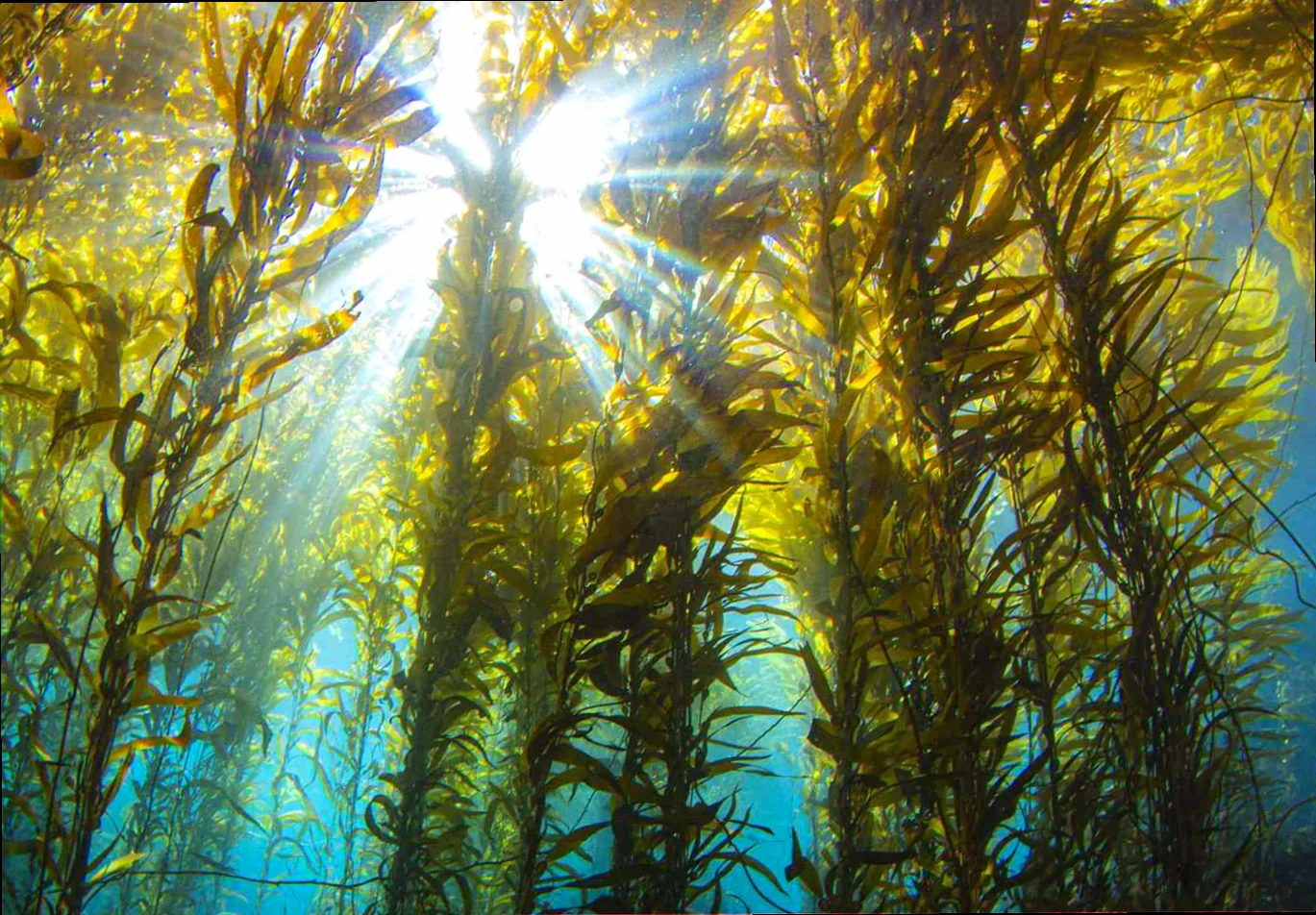
Wilson's Promontory's temperate kelp forest health refers to the ecological vitality and resilience of the underwater forests dominated by brown algae, particularly the golden kelp, in the marine waters surrounding Wilson's Promontory in Victoria, Australia. These vibrant ecosystems are crucial for marine biodiversity, providing essential habitat, food sources, and nursery grounds for countless species. Their robust health indicates a balanced marine environment, capable of supporting a rich tapestry of life and demonstrating natural resistance to environmental stressors.
Scientific Classification and Description
While "health" itself is a state, the ecosystem's integrity is largely defined by its primary structural component: the kelp. The dominant species forming the temperate kelp forests at Wilson's Promontory is the golden kelp, Ecklonia radiata. These remarkable macroalgae belong to the Kingdom Chromista, Phylum Ochrophyta, Class Phaeophyceae, Order Laminariales, Family Lessoniaceae, Genus Ecklonia, Species Ecklonia radiata. A healthy Ecklonia radiata individual can grow to over 2 metres in length, with its holdfast securely anchored to rocky substrates, and its fronds extending upwards, forming a dense canopy that can filter sunlight. A thriving kelp forest typically exhibits a biomass density exceeding 10 kilograms wet weight per square metre, creating a three-dimensional habitat that rivals terrestrial rainforests in complexity and biodiversity.
Identifying Features at a Glance
| Feature | Detail |
|---|---|
| Scientific name (Dominant Kelp) | Ecklonia radiata |
| Size (Adult Kelp) | Up to 2.5 metres in length |
| Endemic range (Ecosystem) | Temperate southern Australian coastline, particularly Victoria |
| Conservation status (Local) | Not individually listed, but the Wilson's Promontory Marine National Park protects the ecosystem |
| Lifespan (Individual Kelp) | Typically 4-7 years in the wild |
Habitat and Distribution in Australia
- Primary biome: Temperate rocky reef marine ecosystems.
- Geographic range: The health of these specific kelp forests pertains to the waters surrounding Wilson's Promontory, located on the southernmost tip of mainland Australia in Victoria. This includes areas within the Wilson's Promontory Marine National Park and adjacent state marine waters.
- Microhabitat: Kelp forests flourish on stable rocky substrates in clear, nutrient-rich temperate waters, typically forming dense stands on submerged reefs and boulders. The complex structure provides diverse microhabitats, from the holdfasts offering shelter to small invertebrates, to the canopy providing refuge for fish and foraging grounds for sea urchins.
- Altitude / depth range: These temperate kelp forests are primarily found in the euphotic and disphotic zones, ranging from just below the low tide mark down to depths of approximately 30 metres, where sufficient light penetrates for photosynthesis.
- Seasonal movement: While the kelp itself is sessile, the health of the forest supports dynamic seasonal movements of associated fauna. Many fish species, such as snapper and barracouta, utilise kelp forests as seasonal feeding grounds, while juvenile fish often migrate into the protective canopy for nursery periods before moving to deeper waters.
Diet, Hunting, and Feeding Ecology
In the context of kelp forest health, "diet" refers to the energy sources and trophic structure that sustain the ecosystem. Kelp, primarily Ecklonia radiata, are the foundational primary producers, converting sunlight into organic matter through photosynthesis. This organic matter forms the base of a complex food web. Herbivores, such as sea urchins (e.g., Centrostephanus rodgersii, although less prevalent at the Prom compared to Tasmania), abalone, and various gastropods, graze directly on the kelp fronds. Detritivores, like some crustaceans and sea cucumbers, consume the decaying kelp particles and associated organic detritus, a crucial pathway in nutrient cycling. Predators, including numerous fish species (e.g., Wrasse, Australian Salmon), crustaceans, and cephalopods, occupy higher trophic levels, feeding on the herbivores and smaller carnivores. A unique foraging behaviour observed in healthy kelp forests, particularly relevant to their resilience, is the "kelp rafting" phenomenon. Detached kelp fronds, still rich in nutrients, can drift for considerable distances, transporting associated organisms and providing temporary food sources to pelagic and deep-sea communities, effectively linking coastal ecosystems with the open ocean and deep-sea environments.
Reproduction and Life Cycle
The health of the kelp forest is intrinsically linked to the successful reproduction and recruitment of its dominant species, particularly Ecklonia radiata. Kelp reproduce sexually via the alternation of generations. Macroscopic sporophytes (the visible kelp plants) release microscopic spores, predominantly during late autumn and winter (March to August), though some reproduction can occur year-round. These spores settle on rocky substrates and develop into male and female gametophytes. Following fertilisation, the resulting zygotes grow into new sporophytes, beginning the cycle anew. The successful recruitment of new kelp plants is vital for maintaining forest density and resilience against disturbance. The forest also serves as a critical nursery ground for countless fish and invertebrate species; many fish lay eggs directly on kelp fronds, and their larvae and juveniles spend formative months within the protective canopy, reaching sexual maturity typically within 1-3 years depending on the species before dispersing.
Unique Adaptations Exclusive to This Species
- Structural Resilience and Wave Attenuation: The robust, flexible stipes and strong holdfasts of Ecklonia radiata are physiologically adapted to withstand the powerful wave action characteristic of the exposed Southern Ocean coastline at Wilson's Promontory. This adaptation allows the kelp to persist in high-energy environments, and in turn, the dense canopy itself acts as a natural breakwater, significantly attenuating wave energy and creating calmer conditions within the forest. This protects smaller, more delicate organisms and reduces sediment re-suspension, maintaining water clarity essential for photosynthetic organisms.
- Chemical Defence against Herbivory: Ecklonia radiata produces a suite of secondary metabolites, including phlorotannins, which are complex phenolic compounds. These compounds act as a chemical defence against excessive grazing by herbivores like sea urchins and gastropods. The varying concentration of these deterrents across different parts of the kelp and at different life stages serves as a behavioural adaptation to manage herbivore pressure, ensuring that not all parts of the plant are equally palatable, thus protecting reproductive tissues and growth zones.
- Biofilm-Mediated Nutrient Acquisition: Beyond direct absorption of dissolved nutrients, healthy kelp fronds support a rich and diverse microbial biofilm. This sensory adaptation, though microscopic, is ecologically significant. These biofilms can fix atmospheric nitrogen and process other dissolved organic matter, making these nutrients available to the kelp. This symbiotic relationship enhances the kelp's nutrient uptake efficiency, particularly in oligotrophic (low nutrient) waters, contributing significantly to the overall productivity and health of the kelp forest ecosystem.
Threats, Conservation, and Human Interaction
The health of Wilson's Promontory's temperate kelp forests faces several significant threats. Top among these is climate change-induced ocean warming and marine heatwaves, which can stress kelp, leading to bleaching and dieback, and also favour the poleward expansion of warm-water species, including some destructive herbivores. Another critical threat is ocean acidification, caused by increased CO2 absorption, which can inhibit the growth of calcifying organisms (like shellfish and corals) that form crucial parts of the reef structure and food web, indirectly impacting kelp forest stability. Finally, localized impacts from human activities such as nutrient runoff from land, marine debris, and unsustainable fishing practices (e.g., overharvesting of abalone or rock lobster which are important grazers and predators respectively) can degrade water quality and disrupt trophic balances. The Wilson's Promontory Marine National Park plays a pivotal role in conservation by providing a "no-take" zone where fishing and extractive activities are prohibited, allowing natural processes to flourish and providing a baseline for monitoring ecosystem health. Additionally, organisations like Parks Victoria, research institutions, and citizen science groups contribute to ongoing monitoring and research efforts to understand and protect these vital underwater forests.
Frequently Asked Questions
Is Wilson's promontory temperate kelp forest health venomous or dangerous to humans?
No, the health of the kelp forest itself, nor the kelp plants that form it, are not venomous or dangerous to humans. On the contrary, a healthy kelp forest provides a safe and fascinating environment for recreational activities such as snorkelling, diving, and wildlife observation. While some marine animals residing within the forest (e.g., certain jellyfish or fish with spines) could cause minor irritation if provoked, the ecosystem as a whole poses no inherent threat.
Where is the best place in Australia to see Wilson's promontory temperate kelp forest health in the wild?
The best place to experience the vibrant health of Wilson's Promontory's temperate kelp forests is within the Wilson's Promontory Marine National Park. Specific renowned dive and snorkel sites include Tongue Point, Norman Island, and the waters around Skull Rock, where the clear waters and protected status allow for exceptional visibility and encounters with thriving marine life within the kelp forests.