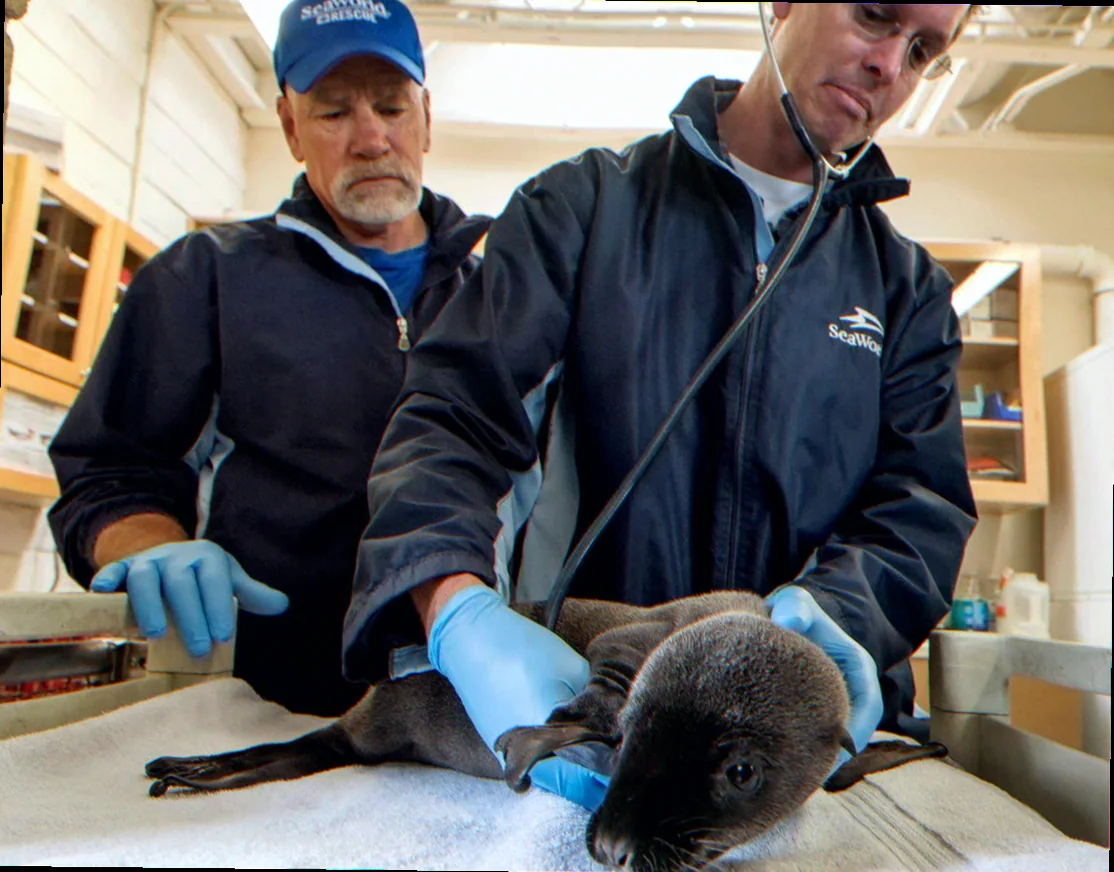
A sea lion pup health assessment is a comprehensive veterinary and ecological evaluation performed on the offspring of the Australian sea lion (Neophoca cinerea) to monitor physiological condition, growth rates, and pathogen prevalence. These assessments are primarily conducted across the offshore islands of South Australia and Western Australia, serving as a vital diagnostic tool for managing the recovery of this endangered pinniped. By quantifying metrics such as blood glucose, lipid levels, and parasite loads, zoologists can identify environmental stressors and inform conservation strategies to halt the species' ongoing population decline.
Scientific Classification and Description
The Australian sea lion is a member of the eared seal family, distinguished by its external ear flaps and the ability to use its hind flippers to walk on land. Its full taxonomic hierarchy is as follows: Kingdom: Animalia → Phylum: Chordata → Class: Mammalia → Order: Carnivora → Family: Otariidae → Genus: Neophoca → Species: Neophoca cinerea. During a health assessment, researchers focus on the pup's physical development; at birth, these pups typically measure approximately 60 to 70 centimetres in length and weigh between 6.4 and 8 kilograms. They are born with a distinctive chocolate-brown natal coat, known as lanugo, which they molt after several months to reveal a silver-grey pelage. Adult sexual dimorphism is extreme in this species: while females grow to 1.5 metres and weigh up to 100 kilograms, mature "bull" males can reach 2.5 metres in length and weigh over 300 kilograms, characterized by a thick, pale mane around their neck.
Identifying Features at a Glance
| Feature | Detail |
|---|---|
| Scientific name | Neophoca cinerea |
| Size (adult) | 1.5m to 2.5m; 64kg to 300kg |
| Endemic range | South Australia and Western Australia (Houtman Abrolhos to The Pages) |
| Conservation status | Endangered (IUCN Red List; EPBC Act) |
| Lifespan | 17-25 years in the wild |
Habitat and Distribution in Australia
- Primary biome: Temperate marine and neritic zones, specifically the "Great Southern Reef" corridor.
- Geographic range: Exclusively endemic to Australia, with the highest concentrations found in the Spencer Gulf, the Great Australian Bight, and the Recherche Archipelago.
- Microhabitat: Sheltered sandy beaches for pup rearing, limestone benches, and tumbled boulders on offshore islands that provide protection from heavy swells.
- Altitude / depth range: Foraging typically occurs on the benthos of the continental shelf at depths between 40 and 150 metres, though they can dive deeper.
- Seasonal movement: Non-migratory; they exhibit extreme philopatry, meaning females return to the exact same colony of their birth to reproduce, leading to high genetic isolation between colonies.
Diet, Hunting, and Feeding Ecology
The Australian sea lion is an opportunistic benthic carnivore, meaning it hunts primarily along the ocean floor rather than in the water column. Their diet is diverse, consisting of cephalopods (squid and cuttlefish), crustaceans (southern rock lobster), and various teleost fish. Interestingly, they are also known to predate on small sharks and rays. Their hunting strategy is one of high-energy persistence, scouring the seafloor for hidden prey. A unique foraging behaviour rarely documented in other pinnipeds is their deliberate ingestion of "gastroliths"-smooth stones found in the stomach. While the exact purpose is debated, these stones are believed to act as ballast for deep diving or as a digestive aid to grind up the hard chitinous shells of lobsters and giant cuttlefish bones.
Reproduction and Life Cycle
The reproductive cycle of Neophoca cinerea is unique among all pinnipeds. Unlike most seals that breed on a strict 12-month annual cycle, the Australian sea lion has a protracted 17.5 to 18-month breeding interval. Furthermore, breeding is asynchronous, meaning different colonies across Australia may be at entirely different stages of the reproductive cycle at any given time. The gestation period lasts approximately 14 months, which includes a period of delayed implantation. Pups are highly dependent on their mothers for 15 to 18 months, which is one of the longest nursing periods in the seal world. This slow reproductive rate is a significant factor in their vulnerability, as a colony cannot quickly recover from a mass mortality event. Health assessments are most critical during the first 6 months of life when pups are susceptible to hookworm infections and environmental toxins.
Unique Adaptations Exclusive to This Species
- Physiological adaptation: Bradycardia and peripheral vasoconstriction. During deep benthic dives, the sea lion can drastically slow its heart rate and shunt blood away from non-essential organs to preserve oxygen for the brain and heart.
- Behavioural adaptation: High-site fidelity. Unlike most marine mammals that roam, Neophoca cinerea females rarely move between colonies, a trait that ensures they are perfectly adapted to the specific local prey and terrain of their home island.
- Sensory adaptation: Highly sensitive vibrissae (whiskers). These whiskers are capable of detecting minute hydrodynamic changes in the water, allowing them to locate prey in the pitch-black environment of the seafloor where light does not penetrate.
Threats, Conservation, and Human Interaction
The survival of the Australian sea lion is threatened by several anthropogenic and biological factors. Historically, commercial sealing in the 19th century decimated their numbers, but today the primary threats are entanglement in commercial fishing gear (specifically gillnets), habitat loss due to climate-induced sea-level rise, and endemic diseases. A major focus of modern health assessments is the hookworm parasite (Uncinaria sanguinis), which lives in the intestines of pups and can cause severe anaemia and mortality. Conservation efforts are led by the Australian Government's Recovery Plan for the Australian Sea Lion, which includes the implementation of "Sea Lion Exclusion Zones" in shark fisheries to prevent accidental drowning. Active monitoring programs, such as those run by the South Australian Research and Development Institute (SARDI), utilize microchipping and pup-tagging to track the health of individual cohorts over decades.
Frequently Asked Questions
Is Sea lion pup health assessment venomous or dangerous to humans?
The assessment process itself is a scientific procedure and carries no venomous risk. However, Australian sea lions are large, powerful carnivores. While pups are generally manageable, adult sea lions can be highly territorial and aggressive if approached. They possess strong jaws and a bite can cause significant trauma and introduce zoonotic bacteria (such as Mycoplasma phocacerebrale, which causes "seal finger"), requiring specialized medical treatment and antibiotics.
Where is the best place in Australia to see Sea lion pup health assessment in the wild?
While health assessments are conducted by permit-holding researchers in restricted areas, the best place for the public to see Australian sea lions in their natural habitat is Seal Bay Conservation Park on Kangaroo Island, South Australia. Here, visitors can take guided tours onto the beach to observe the colony from a safe distance. Other notable locations include Jurien Bay in Western Australia, where eco-tours offer opportunities to swim with sea lions in the shallows of the marine park.
What is the difference between Sea lion pup health assessment and similar species?
The primary difference lies in the species being assessed and their reproductive biology. The Australian sea lion is often confused with the Long-nosed fur seal (Arctocephalus forsteri). However, the Australian sea lion is much larger, has a blunt "dog-like" snout, and lacks the thick, double-layered fur of the fur seal. From a health assessment perspective, the Neophoca cinerea pup requires more frequent monitoring due to its unique 18-month breeding cycle and higher susceptibility to hookworm, whereas fur seal populations in Australia are currently increasing and follow a standard 12-month cycle.