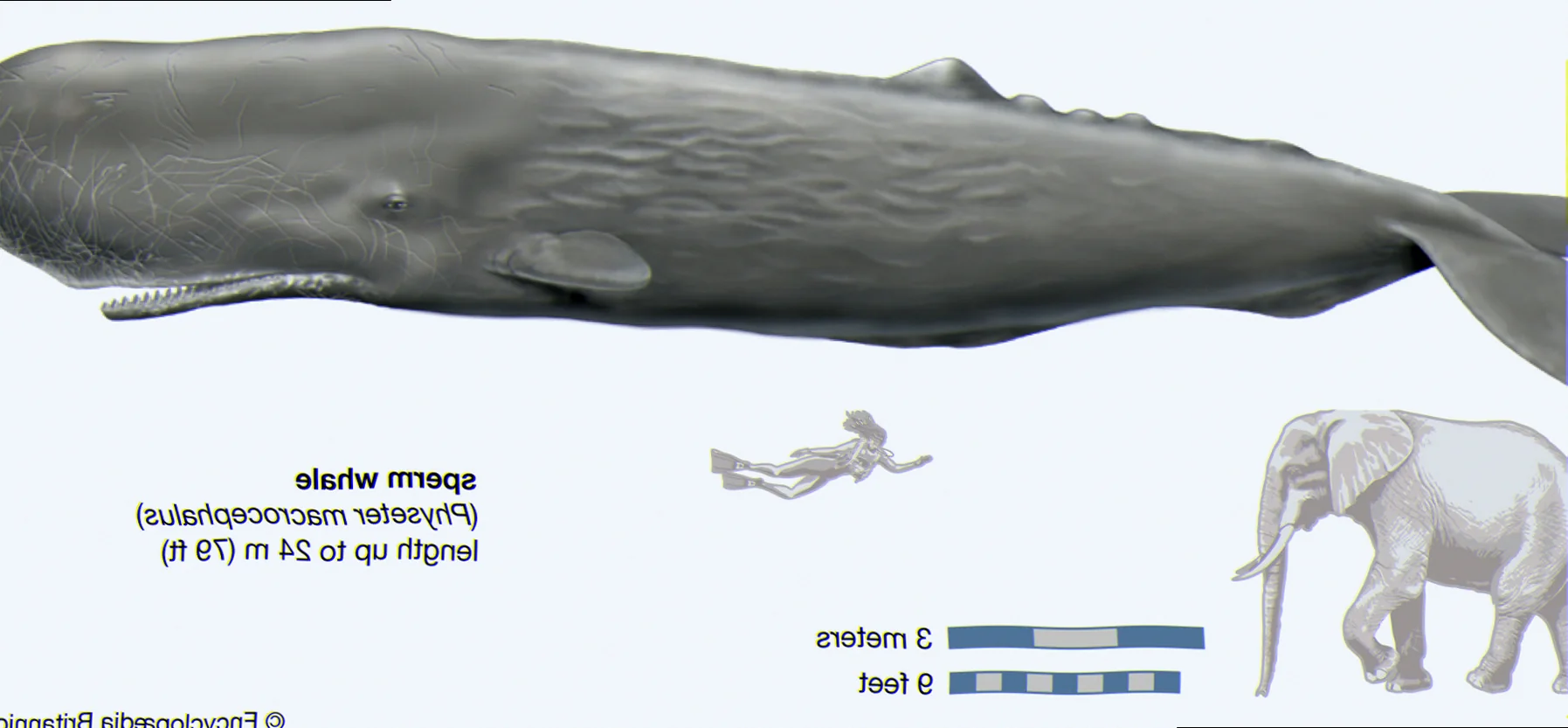
Imagine a society where your identity is defined by a rhythmic series of clicks and your family bonds are forged in the crushing darkness of the abyss, three kilometres below the ocean surface. For sperm whales, social structure analysis has revealed a world of "underwater nations" where distinct cultures, dialects, and traditions are passed down through generations of grandmothers and aunts. In Australian waters, from the Great Australian Bight to the canyons of the Coral Sea, these deep-diving giants maintain some of the most sophisticated social networks on the planet, proving that the largest brain to ever exist in nature is put to use in remarkably "human" ways.
Natural History Overview
| Category | Information |
|---|---|
| Scientific name | Physeter macrocephalus |
| Common name variants | Cachalot, Paanany (Bundjalung), Jeedara (Mirning - referring to a whale spirit) |
| First described (year) | 1758 by Carl Linnaeus |
| Size and weight | Up to 18-20 metres; 45,000 to 57,000 kilograms |
| Longevity record | Approximately 70 to 80 years |
What Makes Sperm whale social structure analysis Extraordinary
The most counter-intuitive aspect of sperm whale society is that it is built entirely on "acoustic culture." Unlike many terrestrial animals that rely on sight or smell to define their borders, sperm whales use codas-short, rhythmic patterns of clicks-to broadcast their social identity. Analysis of these codas shows that sperm whales live in a multilevel society. At the base is the "unit," a stable group of about 10-12 females and their calves. These units then choose to associate only with other units that share the same "dialect," forming "clans" that can consist of thousands of individuals. What is truly extraordinary is that these clans can overlap geographically but never interact. Two groups of sperm whales may swim in the same patch of the Southern Ocean, yet because they speak different "languages" and follow different cultural rules, they treat each other as total strangers. This level of cultural segregation is almost unheard of in the animal kingdom outside of humanity.
Aboriginal and Torres Strait Islander Perspectives
For many Coastal First Nations people in Australia, the sperm whale is not merely a biological entity but a significant figure in the Songlines that crisscross the continent. The Mirning people of the Great Australian Bight have a profound spiritual connection to the whale, particularly through the story of Jeedara, a great white whale spirit who created the limestone cliffs of the Bunda Cliffs. In these traditions, the arrival of whales is often seen as a return of ancestors. In other regions, such as the NSW coast, the Bundjalung and Yuin people have historical records of "whale calling," where humans and marine predators (usually orcas, but involving the broader whale community) interacted in ways that assisted in the management of sea resources. While sperm whales were rarely hunted traditionally due to their deep-water habitat, "drift whales" (beached individuals) were seen as a massive gift from the sea, providing a rare abundance of food, oil, and bone for tools, celebrated through community gatherings and ceremonies that reinforced social ties between different Indigenous groups.
Recent Scientific Discoveries (last 20 years)
- The "Phonetic Alphabet" Discovery (2024): Recent analysis using machine learning has suggested that sperm whale codas are far more complex than previously thought. Researchers found that whales vary the tempo and rhythm of their clicks to convey specific information, effectively possessing a "phonetic alphabet" that allows for a vast array of communication.
- Matrilineal "Babysitting" (2012): Significant studies into the social structure off the coast of volcanic islands and deep-sea canyons have confirmed that sperm whale units practice "alloparenting." While a mother dives deep to hunt for giant squid, other females in the group stay at the surface to guard the calf from orcas, showing a high degree of altruistic coordination.
- Ongoing research: Scientists are currently using "snot-bots" (drones) and hydrophone arrays in the Perth Canyon to investigate how rising ocean temperatures are shifting the distribution of the whales' primary prey, and whether this is forcing different clans to compete for the same territory for the first time in recorded history.
Life History and Ecology
- Diet: Primarily giant and colossal squid, but also deep-sea fish and octopuses. An adult can consume up to 1,000 kg of food per day.
- Habitat: Deep oceanic waters and submarine canyons, including the Great Australian Bight, the Perth Canyon, and the continental shelf break off the East Coast.
- Breeding: Females reach sexual maturity around age 9. They give birth to a single calf every 4 to 20 years, highlighting a very slow reproductive rate.
- Lifespan: In the wild, they can live over 70 years. They are not kept in captivity due to their immense size and deep-diving requirements.
- Movement: Males are the great travellers, migrating from tropical breeding grounds to Antarctic feeding waters, often covering more than 10,000 km in a single year.
Conservation Status and Future Outlook
Currently, the sperm whale is listed as Vulnerable under the Australian Environment Protection and Biodiversity Conservation Act 1999 (EPBC Act) and the IUCN Red List. While the end of commercial whaling in 1978 allowed populations to begin a slow recovery, they face modern threats that their social structures are not equipped to handle. The primary concern in Australian waters is anthropogenic noise from seismic testing and shipping, which interferes with their acoustic communication and hunting. However, an optimistic development is the increasing use of "acoustic refuges"-protected marine areas where shipping lanes are diverted to provide quiet zones for these sound-dependent mammals. The ongoing challenge remains the bioaccumulation of plastics and heavy metals in the deep-sea food chain, which impacts the long-term health of these long-lived apex predators.
Myth-Busting: What People Get Wrong About Sperm whale social structure analysis
Myth 1: Sperm whales are solitary "Moby Dick" style monsters. Truth: Only older males tend to be solitary. The core of the species is highly social, living in tight-knit, cooperative female-led families that exhibit deep emotional bonds and "friendships" that last decades.
Myth 2: They "fight" giant squid in epic battles every day. Truth: While they do eat giant squid, these are rarely "battles" in the way fiction depicts. The whale uses powerful sonar to stun its prey, making the giant squid more of a sophisticated snack than a duelling partner.
Questions People Ask
Is Sperm whale social structure analysis found only in Australia?
No, sperm whales are a cosmopolitan species found in all the world's oceans. However, Australia is unique because it sits at the junction of three oceans (Pacific, Indian, and Southern), making our waters a critical "highway" for different clans. Some clans appear to be "residents" of the Australian continental shelf, while others are just passing through on global migrations.
Has Sperm whale social structure analysis ever been kept in captivity?
There is no record of a sperm whale successfully being kept in a long-term captive environment like an aquarium. Their physiological need to dive to depths of 2,250 metres (the record for the species) and their reliance on complex social clicks that bounce off tank walls make captivity both impossible and inhumane.
How does Sperm whale social structure analysis cope with Australian droughts and fires?
While they are marine animals, they are indirectly affected by terrestrial events. Intense bushfires lead to significant nutrient runoff into the ocean, which can trigger algal blooms. These blooms eventually sink and can alter the oxygen levels in the deep-sea canyons where sperm whales hunt. Furthermore, climate cycles like El Niño, which bring drought to Australia, also change ocean currents and water temperatures, shifting the location of the squid "hotspots" the whales rely on.