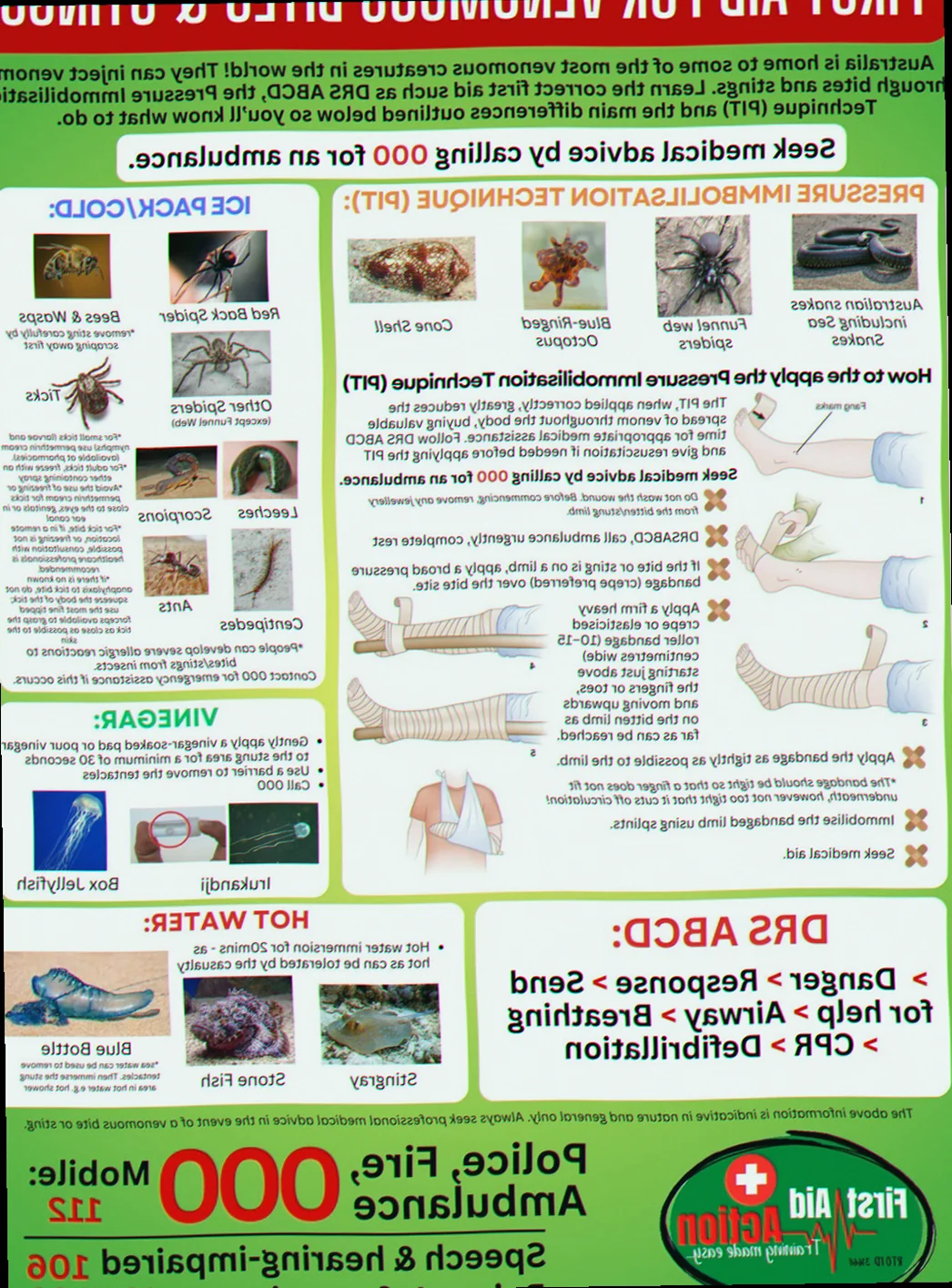
Stonefish first aid procedures in Australia are critical for anyone encountering these masters of camouflage, the most venomous fish in the world. Prompt and correct first aid significantly reduces pain, tissue damage, and the risk of systemic complications following a sting. These cryptic creatures, belonging to the genus Synanceia, are vital components of Australian marine ecosystems, acting as crucial benthic predators that help regulate populations of smaller reef fish and invertebrates, thus maintaining reef health and biodiversity.
Scientific Classification and Description
Kingdom: Animalia → Phylum: Chordata → Class: Actinopterygii → Order: Scorpaeniformes → Family: Synanceiidae → Genus: Synanceia → Species: Synanceia verrucosa (Reef Stonefish). Adult specimens of Synanceia verrucosa typically range from 30 to 50 cm in length, with some individuals reaching up to 60 cm. Their weight can vary considerably depending on age and condition, but a mature adult can weigh between 1 to 2.5 kg.
Identifying Features at a Glance
| Feature | Detail |
|---|---|
| Scientific name | Synanceia verrucosa |
| Size (adult) | 30-60 cm length; 1-2.5 kg weight |
| Endemic range | Coastal waters of Queensland, Northern Territory, and Western Australia, including the Great Barrier Reef and coral reef systems of the Indo-Pacific region. |
| Conservation status | Not listed on IUCN Red List; Not listed under Australia's Environment Protection and Biodiversity Conservation Act 1999 as nationally threatened. |
| Lifespan | Approximately 10-15 years in the wild. |
Habitat and Distribution in Australia
- Primary biome: Tropical and subtropical coral reefs, rocky shorelines, and sandy or muddy seabeds.
- Geographic range: Found along the northern and eastern coasts of Australia, from Shark Bay in Western Australia, across the Northern Territory, and throughout Queensland, particularly within the Great Barrier Reef Marine Park. Their distribution extends into the Indo-Pacific region.
- Microhabitat: They favour shallow, clear waters, often found nestled amongst coral rubble, rocks, sponges, and algae. They are masters of camouflage, perfectly blending with their surroundings, and can be found in tidal pools, reef flats, and on the seaward slopes of reefs.
- Altitude / depth range: Typically found in intertidal zones down to depths of approximately 50 metres.
- Seasonal movement: Stonefish are largely sedentary and territorial, exhibiting no significant seasonal migration. Their movements are typically limited to short distances for hunting or to find a more suitable position for camouflage.
Diet, Hunting, and Feeding Ecology
The diet of the stonefish consists primarily of small reef fish, such as damselfish and gobies, as well as crustaceans like small crabs. They are classic ambush predators, relying on their exceptional camouflage to remain undetected. Their hunting strategy involves lying motionless on the seabed, often partially buried in sand or hidden amongst coral, waiting for unsuspecting prey to swim within striking distance. When prey is close enough, the stonefish lunges with incredible speed, engulfing its victim in its large mouth. A unique foraging behaviour observed is their ability to remain dormant for extended periods, sometimes days, conserving energy until a suitable prey item presents itself, demonstrating a remarkable metabolic efficiency in their nutrient-scarce reef environments.
Reproduction and Life Cycle
The breeding season for stonefish in Australian waters generally occurs during the warmer months, typically from October to March. Fertilisation is external. Females release eggs, which are then fertilised by the male. While precise clutch sizes can vary, a single female can release thousands of eggs. There is no parental care after spawning. The eggs hatch into planktonic larvae that drift in the water column before settling on the seabed to develop into juvenile stonefish. Age at sexual maturity is not precisely documented but is estimated to be around 2-3 years.
Unique Adaptations Exclusive to This Species
- Venomous Dorsal Spines: The most prominent adaptation is the presence of 13 potent dorsal spines, each connected to a venom gland. When threatened or stepped upon, these spines can be erect, injecting a complex neurotoxin and cardiotoxin into the attacker. The venom delivery mechanism is passive, requiring pressure to be applied to the spine.
- Extreme Camouflage: Their rough, warty skin, coupled with a mottled colouration that perfectly mimics surrounding coral, rocks, and sand, provides unparalleled camouflage. This allows them to become virtually invisible to both predators and prey, a crucial behavioural adaptation for survival and hunting in their exposed reef habitats.
- High Tolerance to Environmental Fluctuations: Stonefish exhibit remarkable resilience to changes in salinity, temperature, and oxygen levels common in intertidal zones and shallow reef environments. This physiological adaptation allows them to thrive in habitats that would be lethal to many other fish species.
Threats, Conservation, and Human Interaction
While stonefish themselves are not heavily targeted for conservation due to their widespread distribution and abundance, they are indirectly affected by threats to their habitat. The primary threats include: 1. Coral Bleaching and Reef Degradation: Caused by rising sea temperatures due to climate change, which destroys their camouflage substrate and reduces prey availability. 2. Habitat Pollution: Runoff from land, including agricultural chemicals and plastic debris, degrades water quality and smothers reef habitats. 3. Destructive Fishing Practices: Although not a direct threat to stonefish, methods that damage reef structures can impact their long-term survival by altering their microhabitats. Currently, there are no specific Australian conservation programs focused solely on stonefish. However, broader marine conservation initiatives, such as the management of the Great Barrier Reef Marine Park and efforts to reduce coastal pollution, indirectly benefit stonefish populations by protecting their ecosystem.
Frequently Asked Questions
Is Stonefish first aid procedures australia venomous or dangerous to humans?
Yes, stonefish are highly venomous and pose a significant danger to humans. Their venom is among the most potent found in marine life, capable of causing excruciating pain, severe swelling, tissue necrosis, paralysis, shock, and, in rare untreated cases, can be fatal. Medical attention is always required following a sting.
Where is the best place in Australia to see Stonefish first aid procedures australia in the wild?
The Great Barrier Reef Marine Park, particularly in areas with abundant coral rubble and shallow reef flats, is an excellent place to potentially encounter stonefish. Locations like Orpheus Island Research Station, Heron Island, and various dive sites off the coast of Queensland offer suitable habitats. It is crucial to exercise extreme caution and wear reef shoes when walking in these areas.
What is the difference between Stonefish first aid procedures australia and similar species?
The stonefish (Synanceia genus) is distinguished from other venomous fish, such as scorpionfish (family Scorpaenidae, which includes stonefish as a subfamily Synanceiinae), by its extremely flattened, toad-like appearance and its tendency to bury itself partially in the substrate. While many scorpionfish also possess venomous spines and excellent camouflage, stonefish are generally considered the most venomous and possess a more sedentary, camouflaged demeanour. For instance, the devil scorpionfish (Scorpaenodes guamensis) is also venomous and well-camouflaged but typically has a more elongated body and is often found perched on corals rather than buried in sand.