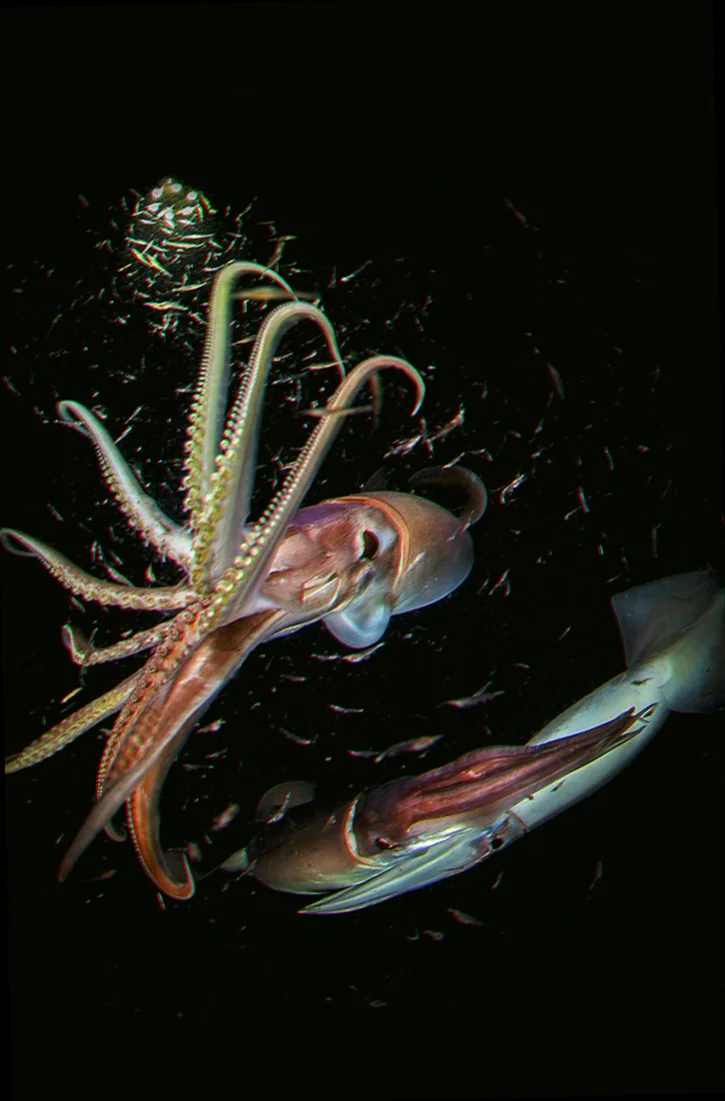
Ecological significance: The Humboldt squid (Dosidicus gigas) occupies a high trophic level as a formidable apex predator, exerting significant top-down pressure on mesopelagic fish and crustacean populations. Within the broader context of Pacific marine ecosystems, including those intersecting with the Australian Fishing Zone (AFZ) through range shifts, this species acts as a critical energy conduit between deep-water biomass and large marine mammals. If the competitive equilibrium between these cephalopods and commercial fisheries were to collapse, it would likely result in an uncontrolled trophic cascade, leading to the depletion of forage fish stocks and the subsequent decline of higher-order predators like Sperm Whales.
Species Profile
| Attribute | Data |
|---|---|
| Scientific name | Dosidicus gigas (d'Orbigny, 1835) |
| Trophic level | Apex predator |
| Population estimate | Highly variable; biomass estimates in the Eastern Pacific have reached up to 10 million tonnes during peak recruitment years (FAO, 2022). |
| Native range | Eastern Pacific Ocean (Chile to California); extralimital sightings increasingly common in the Central Pacific and potential for range expansion into the Tasman Sea. |
| EPBC Act status | Not listed (Non-native/Extralimital) |
Position in the Food Web
- Prey species: Dosidicus gigas is an opportunistic generalist, primarily consuming Myctophids (lanternfish) and small pelagic fish like the Pacific Sardine. They utilize rapid tentacular strikes and a powerful chitinous beak to disable prey, often engaging in pack-hunting behaviour to corral schools of fish.
- Predators: The most significant natural predator is the Sperm Whale (Physeter macrocephalus), which hunts them in the mesopelagic zone. Other predators include Billfish and large sharks such as the Shortfin Mako.
- Competitors: This species competes directly with the Yellowfin Tuna (Thunnus albacares) and various hake species for the same forage fish niche. In Australian waters, similar ecological competition is observed between native Arrow Squid (Nototodarus gouldi) and commercial finfish fleets.
- Symbiotic partners: They host various endoparasites, including larval nematodes and dicyemid mesozoans, which maintain a parasitic relationship that can influence squid health and reproductive output.
- Keystone role: The Humboldt squid is considered an "opportunistic keystone" species. Its rapid growth and high metabolic demands allow it to quickly dominate an ecosystem, significantly altering the abundance of lower trophic levels and dictating the distribution of commercial fish stocks.
Habitat Requirements and Microhabitat Use
The Humboldt squid is primarily associated with the pelagic and mesopelagic zones of the open ocean, often found at depths ranging from the surface to 1,200 metres. A critical physiological requirement for this species is the proximity to Oxygen Minimum Zones (OMZs). They possess a unique metabolic flexibility that allows them to thrive in hypoxic conditions where many of their competitors and predators cannot survive for long periods. While their native range is the Eastern Pacific, the strengthening of the East Australian Current (EAC) and the warming of the Tasman Sea present new "blue water" corridors that could facilitate the movement of such highly mobile cephalopods into Australian bioregions, specifically the South-east Marine Region and the Temperate East Marine Region. They require temperate to tropical water temperatures, typically between 15°C and 28°C, though they can tolerate colder deep-water incursions during diurnal vertical migrations.
Reproductive Strategy and Population Dynamics
This species follows an extreme r-selected life history strategy. They are semelparous, meaning they typically spawn once and die shortly thereafter. The breeding cycle is often triggered by fluctuations in water temperature and the availability of high-protein prey. A single female can produce up to 20 million eggs in her short lifespan (usually 1 to 2 years). This high reproductive potential allows for "population explosions" when environmental conditions are favourable. However, juvenile survival rates are remarkably low, often less than 1%, due to intense cannibalism and predation by larval fish. The primary factor limiting population growth is the availability of mesopelagic biomass and the expansion or contraction of the Oxygen Minimum Zone, which provides a refuge from less hypoxia-tolerant predators.
Threats and Vulnerability Analysis
- Introduced species pressure: While the squid itself is often the invader, it faces pressure from the depletion of its prey by industrial "supertrawlers" and foreign fishing vessels which act as an invasive mechanical pressure on the ecosystem.
- Land-use change: Agricultural runoff from coastal regions in the Pacific leads to eutrophication, which expands Oxygen Minimum Zones. While this initially benefits the squid by providing more habitat refuge, extreme hypoxia can eventually limit the recruitment of their prey species.
- Climate projections: By 2050, ocean warming is projected to shift the distribution of Dosidicus gigas further poleward. For Australia, this means a higher probability of these squid entering the Great Australian Bight or the Tasman Sea, potentially disrupting native squid fisheries and competing with the Southern Bluefin Tuna industry.
- Disease: They are vulnerable to various protozoan infections and heavy metal bioaccumulation (particularly cadmium and mercury), which can impact their neurological function and hunting efficiency.
Recovery Actions and Research Gaps
Currently, there are no specific recovery plans for the Humboldt squid as it is often considered a pest or a competitor to commercial fisheries rather than a threatened species. In Australia, management focus remains on monitoring biosecurity and the potential arrival of extralimital cephalopods that could impact the $100 million Australian squid and octopus fishery. Research is currently focused on satellite tagging to track long-distance migrations. A critical data gap remains in our understanding of how ocean acidification will impact the statolith (inner ear bone) development of paralarvae, which is essential for their balance and predatory success. Understanding the "recruitment flip"-where a minor environmental change causes a population crash or boom-is the holy grail of current teuthological research in the Pacific.
Ecological FAQ
Why is Humboldt squid competition with fisheries important to its ecosystem?
The competition serves as a regulatory mechanism for biomass distribution. When fisheries over-harvest top predators like tuna, the Humboldt squid fills that vacant niche, preventing the overpopulation of smaller mesopelagic fish. This "squid-dominated" state ensures that energy still flows to deep-water predators like Sperm Whales, even if the surface-level commercial fish stocks are depleted.
How has the Humboldt squid competition with fisheries population changed over the last 50 years?
The population has shown a dramatic geographic expansion. Historically confined to the Eastern Tropical Pacific, the species has expanded its range as far north as Alaska and as far south as central Chile. This change is largely attributed to "fishing down the food web," where the removal of large predatory finfish has reduced competition and predation pressure on the squid, allowing their populations to surge and expand into new territories.
What can individuals do to support Humboldt squid competition with fisheries conservation?
Individuals can support sustainable seafood initiatives, such as those certified by the Marine Stewardship Council (MSC). By choosing seafood that is harvested with minimal bycatch and within scientifically managed limits, consumers help maintain the predatory balance in the ocean, ensuring that Humboldt squid populations do not become artificially inflated due to the removal of their natural competitors and predators.