Natural History Overview
| Category | Information |
|---|---|
| Scientific name | Symbiodinium (dinoflagellates) and various cnidarians (corals, anemones, jellyfish) |
| Common name variants | Zooxanthellae (for Symbiodinium), Reef Corals, Giant Clams, Sea Anemones |
| First described (year) | Symbiodinium: Freudenthal 1962; Corals: Linnaeus 1758 |
| Size and weight | Symbiodinium: microscopic (5-10 micrometres); Corals: colonies can span several metres and weigh tonnes |
| Longevity record | Individual coral colonies can live for hundreds, even thousands, of years. Individual Symbiodinium cells have a much shorter lifespan, but are constantly reproducing within the host. |
What Makes Symbiosis in Great Barrier Reef Invertebrates Extraordinary
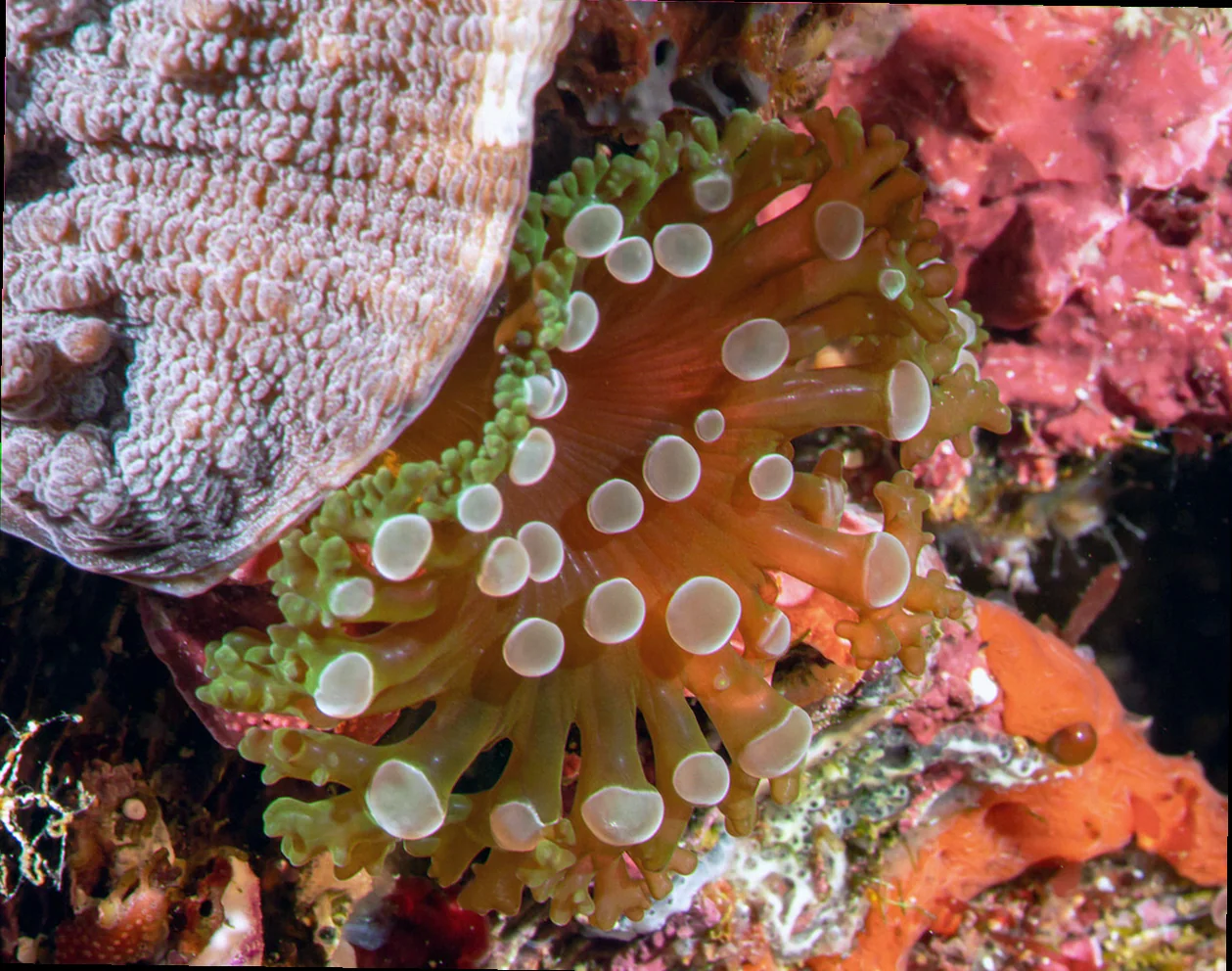
The symbiotic relationship between zooxanthellae (a type of dinoflagellate algae) and reef-building corals is the absolute bedrock of the Great Barrier Reef's existence. It's not just a cooperative arrangement; it's a fundamental engine of life and growth. The zooxanthellae, which live within the coral's tissues, are photosynthetic powerhouses. They capture sunlight and convert it into energy, producing sugars and oxygen. The coral, in turn, provides the algae with a protected environment and essential compounds like carbon dioxide and nitrogenous waste. This seemingly simple exchange is extraordinary because it allows corals to thrive in nutrient-poor tropical waters, building massive calcium carbonate skeletons that form the very structure of the reef. Without this partnership, the vibrant, complex ecosystems we associate with the Great Barrier Reef simply wouldn't exist. It's a biological feat that essentially allows corals to "eat sunlight."
Aboriginal and Torres Strait Islander Perspectives
For the Traditional Owners of the Great Barrier Reef, the intricate web of life, including these symbiotic relationships, has long been a source of deep cultural and spiritual connection. Many Aboriginal and Torres Strait Islander peoples view marine creatures not just as resources, but as kin, imbued with ancestral spirits and stories. The creation stories of many Indigenous groups across Queensland often speak of Ancestral Beings shaping the land and sea, and the beings within them. While specific lore may vary between nations, the understanding of interconnectedness is universal. For example, the Gabul-gari (sea country) of the Kuku Yalanji people encompasses a vast marine estate where the health of the coral reefs is intrinsically linked to the health of other marine life and the overall ecosystem. The cyclical nature of life and renewal, inherent in symbiotic relationships, would have been observed and understood through generations of living in harmony with the marine environment, including the food sources derived from healthy reef systems.
Recent Scientific Discoveries (last 20 years)
- Discovery 1: Genetic Diversity of Symbiodiniaceae (approx. 2005 onwards): Scientists discovered that what was once thought to be a single genus of symbiotic algae (Symbiodinium) is actually a vast and complex group of at least ten distinct genera, now called the Symbiodiniaceae. This has revealed that different coral species can host different types of these algae, and the specific combinations can influence the coral's tolerance to environmental changes, such as rising sea temperatures.
- Discovery 2: Coral "Breathing" and Symbiont Uptake (approx. 2010s): Research has shown that corals actively "breathe" in their symbiotic algae, and that the process isn't static. Corals can acquire new types of symbionts from the environment, and this flexibility is crucial for adaptation. This discovery has significantly changed our understanding of how corals might recover from bleaching events.
- Ongoing research: Scientists are actively investigating the genetic mechanisms behind symbiont shuffling and acquisition, the role of microbial communities (bacteria and archaea) living alongside the symbionts, and how these complex symbiotic networks respond to climate change pressures like ocean acidification and heatwaves.
Life History and Ecology
- Diet: Corals receive the majority of their nutrition (up to 90%) from the photosynthetic products of their symbiotic algae. They also capture plankton and small organic particles from the water column using their tentacles.
- Habitat: Symbiotic relationships are foundational to coral reefs, which are found in warm, shallow, clear, and nutrient-poor tropical and subtropical waters. The Great Barrier Reef is the world's largest coral reef system, stretching over 2,300 kilometres along the coast of Queensland.
- Breeding: Many corals reproduce sexually through broadcast spawning, releasing eggs and sperm into the water column simultaneously. Fertilised eggs develop into larvae that drift on currents before settling to form new colonies. The timing of spawning is often synchronised, occurring during specific lunar phases and warmer months.
- Lifespan: Individual coral colonies can be incredibly long-lived, with some estimated to be over 4,000 years old. The symbiotic algae cells themselves have a much shorter lifespan but are constantly replenished within the coral host.
- Movement: Corals are sessile (fixed in one place) as adults. However, their larvae can travel hundreds of kilometres on ocean currents, facilitating the dispersal and colonisation of new reef areas.
Conservation Status and Future Outlook
The symbiotic partnerships that build the Great Barrier Reef are currently under immense pressure. While individual coral species may not have specific IUCN listings for their symbiotic state, the health of the reef ecosystem itself is a major concern. Climate change, particularly rising sea temperatures leading to mass coral bleaching events, is the primary driver of decline. Ocean acidification, pollution from land run-off, and outbreaks of crown-of-thorns starfish also pose significant threats. An optimistic development is the ongoing research into coral resilience and assisted evolution, exploring ways to foster or introduce more heat-tolerant symbiont communities. However, the ongoing concern remains the sheer scale and speed of climate change, which threatens to outpace the reef's natural adaptive capacity.
Myth-Busting: What People Get Wrong About Symbiosis in Great Barrier Reef Invertebrates
Myth 1: Corals are just rocks. Truth: Corals are living animals, cnidarians, that build these incredible structures through a partnership with microscopic algae. The calcium carbonate skeletons are the result of their biological activity.
Myth 2: Coral bleaching is just the coral dying. Truth: Coral bleaching is a stress response. When stressed (usually by heat), corals expel their symbiotic algae, causing them to turn white. If the stress is removed, the coral can reabsorb algae and recover. However, prolonged or severe bleaching can lead to death.
Questions People Ask
Is Symbiosis in Great Barrier Reef Invertebrates found only in Australia?
No, symbiotic relationships between corals and Symbiodiniaceae are found in coral reefs worldwide, in tropical and subtropical oceans. However, the Great Barrier Reef is the largest and most biodiverse example of this phenomenon on Earth.
Has Symbiosis in Great Barrier Reef Invertebrates ever been kept in captivity?
Yes, many species of symbiotic corals and anemones have been successfully kept and bred in aquaria for decades. This captive breeding is crucial for research, conservation efforts, and the aquarium trade, helping to reduce pressure on wild populations.
How does Symbiosis in Great Barrier Reef Invertebrates cope with Australian droughts and fires?
Directly, droughts and fires on land do not directly impact the symbiotic relationships on the reef. However, indirectly, they are major problems. Bushfires can lead to increased sediment and nutrient runoff from the land into the ocean when heavy rains follow, which degrades water quality and harms corals. Droughts can exacerbate water scarcity issues that impact coastal communities and their ability to manage land-based pollution.