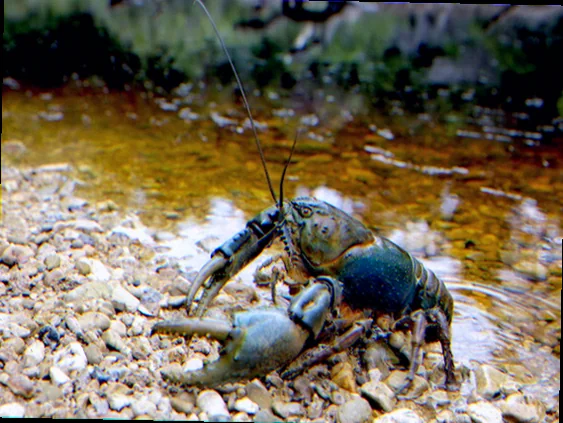
Ecological significance: Tasmanian freshwater crayfish occupy a crucial trophic level as both detritivores and herbivores within freshwater ecosystems, processing leaf litter and algae which forms the base of the food web. They are a significant food source for larger predators, linking benthic energy to higher trophic levels, including iconic species like the platypus. A decline in crayfish populations would lead to reduced water quality due to increased organic matter accumulation, altered stream invertebrate communities, and cascading effects on predator populations, ultimately impacting the overall health and resilience of Tasmanian freshwater ecosystems.
Species Profile
| Attribute | Data |
|---|---|
| Scientific name | Astacopsis gouldi (Clark, 1936) - the Giant Freshwater Crayfish, and several other species within the Astacopsis genus. |
| Trophic level | Omnivore, primarily detritivore and herbivore, with opportunistic scavenging. |
| Population estimate | Estimates suggest fewer than 2,000 mature individuals of A. gouldi remain in the wild (Department of Natural Resources and Environment Tasmania, 2023). |
| Native range | Endemic to Tasmania, Australia. Found in rivers and streams across the island. |
| EPBC Act status | Endangered |
Position in the Food Web
- Prey species: Tasmanian freshwater crayfish consume a diverse diet including decaying plant matter (leaf litter, submerged macrophytes), algae, small invertebrates (insect larvae, snails), and occasionally carrion. They locate food primarily through chemoreceptors and tactile sensing with their antennae.
- Predators: The Spotted-tailed Quoll (Dasyurus maculatus) is a significant predator of larger crayfish, particularly juveniles and sub-adults. Platypus (Ornithorhynchus anatinus) also predate on crayfish, using electroreception to detect them in murky waters. Introduced Brown Trout (Salmo trutta) are opportunistic predators, especially on smaller crayfish.
- Competitors: The Common Yabby (Cherax destructor), an introduced species, competes with native crayfish for food and habitat, particularly in slower-flowing sections of rivers. Yabbies are more aggressive and reproduce more rapidly, often outcompeting native species.
- Symbiotic partners: Crayfish often host epibiotic communities of algae and diatoms on their carapace, providing camouflage and potentially contributing to nutrient uptake. A commensal relationship exists with certain species of freshwater snails that graze on algae growing on the crayfish's shell.
- Keystone role: Astacopsis gouldi can be considered an indicator species. Its presence and population health reflect the overall condition of the freshwater ecosystem. Due to its large size and ecological role, it also exhibits characteristics of an umbrella species, meaning that protecting its habitat benefits a wider range of species.
Habitat Requirements and Microhabitat Use
Tasmanian freshwater crayfish require cool, clear, well-oxygenated streams and rivers with stable substrates of bedrock, boulders, and gravel. They are particularly associated with forested catchments within the Tasmanian Wilderness World Heritage Area, and the North-East Highlands bioregion. Water quality is paramount; they are sensitive to turbidity, pollution (particularly heavy metals from historical mining activities), and elevated water temperatures. They prefer areas with complex instream habitat providing refuge from predators and strong currents, such as under large rocks, within root systems of riparian vegetation (particularly myrtle beech - Nothofagus cunninghamii), and in deep pools. Specific vegetation communities include cool temperate rainforests and wet sclerophyll forests. The presence of a healthy riparian zone is critical for maintaining water quality and providing leaf litter inputs.
Reproductive Strategy and Population Dynamics
Tasmanian freshwater crayfish exhibit a K-selected reproductive strategy, characterized by low fecundity, slow growth, and long lifespan. Females typically carry eggs for an extended period (up to 18 months) and produce relatively few, large eggs. Breeding is often triggered by autumn rainfall and decreasing water temperatures. Juvenile survival rates are low, with many individuals succumbing to predation or habitat limitations. Population growth is primarily limited by slow reproductive rates, long generation times (estimated at over 20 years for A. gouldi), and habitat degradation. Recruitment is highly variable and dependent on suitable environmental conditions during critical life stages.
Threats and Vulnerability Analysis
- Introduced species pressure: The Common Yabby (Cherax destructor) is a major threat, competing for resources and potentially transmitting diseases to native crayfish. Introduced trout species also prey on crayfish, particularly juveniles.
- Land-use change: Historical and ongoing forestry practices, including clear-felling and road construction, have led to increased sedimentation and habitat degradation in many crayfish-bearing streams. Agricultural runoff containing pesticides and fertilizers also poses a threat.
- Climate projections: Climate change is projected to lead to increased water temperatures, altered rainfall patterns (more frequent and intense droughts and floods), and increased frequency of bushfires in Tasmania. These changes are likely to reduce suitable crayfish habitat and increase stress on populations. By 2050, models predict a significant reduction in the extent of cool-water refugia.
- Disease: ‘Crayfish plague', caused by the oomycete Aphanomyces astaci, is a significant threat to freshwater crayfish populations globally. While not currently widespread in Tasmania, the introduction of this pathogen could have devastating consequences.
Recovery Actions and Research Gaps
Recovery efforts for Tasmanian freshwater crayfish include habitat restoration (riparian revegetation, erosion control), control of introduced species (yabby trapping, trout management), and ongoing monitoring of populations. A national recovery plan for Astacopsis gouldi is in place, guiding conservation actions. Captive breeding programs are being explored, but face challenges due to the species' slow reproductive rate and complex life cycle. Translocation projects have been undertaken to establish populations in previously occupied habitats. A critical data gap remains regarding the genetic diversity and population structure of different Astacopsis species across Tasmania. Understanding these patterns is essential for effective conservation management and preventing inbreeding depression.
Ecological FAQ
Why is Tasmanian freshwater crayfish habitat important to its ecosystem?
Tasmanian freshwater crayfish are vital detritivores, breaking down leaf litter and other organic matter, releasing nutrients back into the water column, and improving water quality. This process supports algal growth, which forms the base of the food web. They also provide a crucial food source for larger predators, linking benthic energy to higher trophic levels. Their burrowing activity can also aerate the stream bed, benefiting other invertebrates.
How has the Tasmanian freshwater crayfish habitat population changed over the last 50 years?
The population of Tasmanian freshwater crayfish, particularly Astacopsis gouldi, has declined significantly over the last 50 years due to a combination of factors including habitat loss, introduced species, and historical overfishing. Prior to the 1970s, they were commercially fished, leading to substantial population reductions. Continued habitat degradation and the spread of the Common Yabby have exacerbated the decline, resulting in a fragmented distribution and reduced abundance.
What can individuals do to support Tasmanian freshwater crayfish habitat conservation?
Individuals can support conservation efforts by reducing their water usage to minimize impacts on stream flows, avoiding the use of pesticides and herbicides near waterways, supporting sustainable forestry practices, and reporting sightings of Common Yabbies to relevant authorities. Participating in citizen science projects focused on freshwater monitoring and habitat restoration can also make a valuable contribution. Furthermore, advocating for stronger environmental regulations and supporting organizations dedicated to freshwater conservation are important actions.