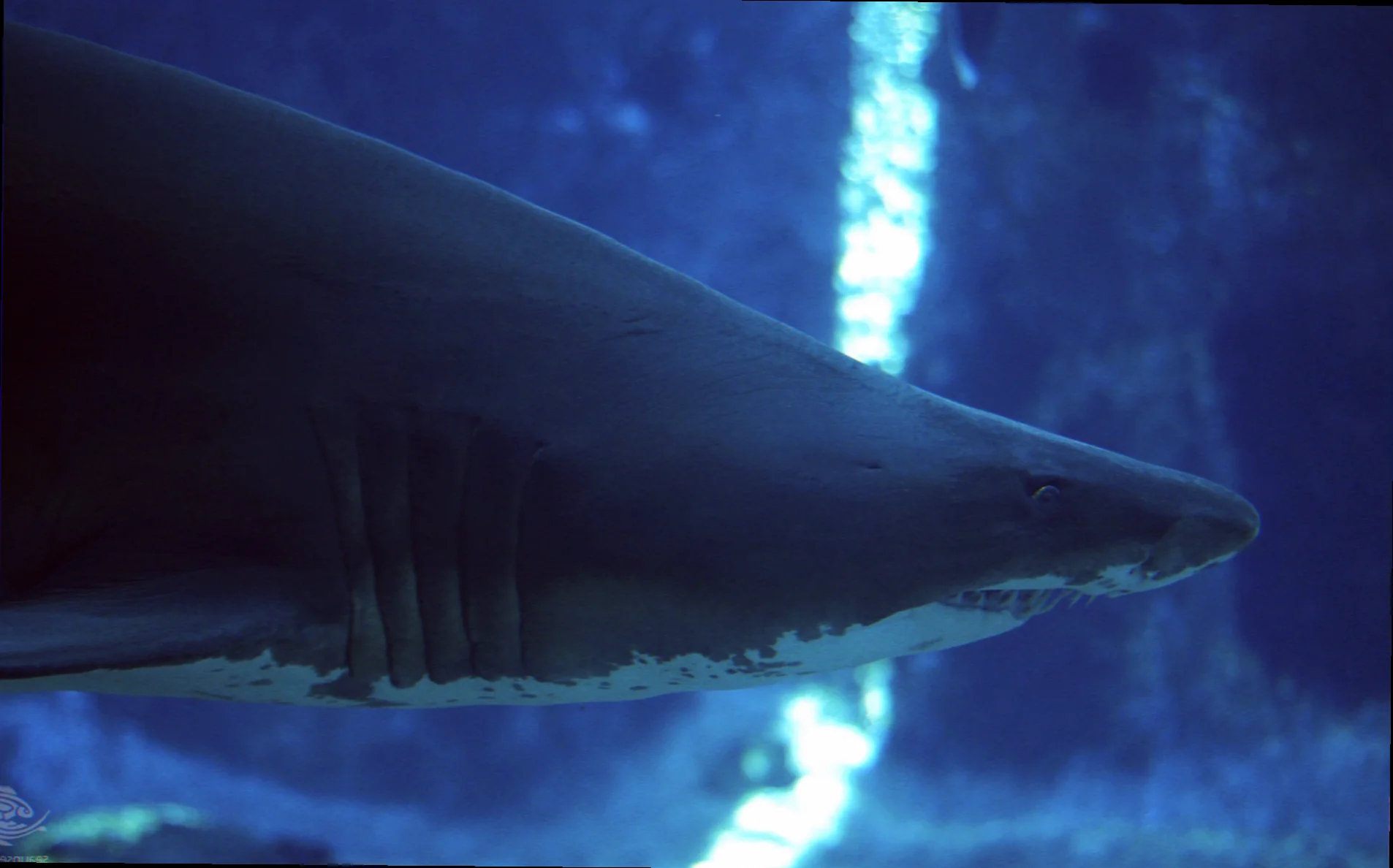
Ragged tooth shark breeding grounds at Seal Rocks refers to a paramount aggregation site off the coast of New South Wales, Australia, where the critically endangered grey nurse shark (Carcharias taurus) congregates annually for reproductive purposes. These specific underwater rocky reefs, gutters, and caves within the Port Stephens-Great Lakes Marine Park provide essential shelter and a suitable environment for courtship, mating, and gestation. The ecological significance of this site is immense, representing a vital sanctuary for the survival and population recovery of this iconic marine predator.
Scientific Classification and Description
The organism central to the Ragged tooth shark breeding grounds at Seal Rocks is the grey nurse shark, known scientifically as Carcharias taurus (Rafinesque, 1810). This species belongs to the order Lamniformes, often referred to as mackerel sharks, which includes other formidable predators like great white sharks and mako sharks. Its full taxonomic classification is as follows: Kingdom Animalia → Phylum Chordata → Class Chondrichthyes → Order Lamniformes → Family Odontaspididae → Genus Carcharias → Species Carcharias taurus.
Adult Carcharias taurus are robust sharks, typically reaching lengths between 2.5 and 3.2 metres, with exceptional individuals reported slightly larger. Females generally grow larger than males. Their body weight can range from 95 to 160 kilograms, depending on age, sex, and reproductive state. The species is characterised by a flattened, conical snout, small eyes, and a powerful, fusiform body. Two large dorsal fins are present, almost equal in size, with the first dorsal fin originating well behind the pectoral fins. The caudal fin is asymmetrical, with a distinct upper lobe. A unique feature is its relatively small, sharp, needle-like teeth, which protrude from the mouth even when closed, giving it a perpetually fearsome "ragged" appearance, hence one of its common names.
Identifying Features at a Glance
| Feature | Detail |
|---|---|
| Scientific name | Carcharias taurus |
| Size (adult) | 2.5 - 3.2 metres; 95 - 160 kilograms |
| Endemic range | Globally circumtropical and temperate waters; distinct populations along the eastern and western coasts of Australia, with Seal Rocks being critical for the East Coast population. |
| Conservation status | Critically Endangered (IUCN Red List); Critically Endangered (Australian EPBC Act) |
| Lifespan | Up to 45 years in the wild; typically shorter in captivity (e.g., 20-30 years) |
Habitat and Distribution in Australia
- Primary biome: Coastal marine ecosystems, specifically temperate and subtropical waters characterized by rocky reefs, submerged caves, gutters, and occasionally estuarine environments.
- Geographic range: In Australia, Carcharias taurus is found in two genetically distinct populations: one along the east coast from southern Queensland to southern New South Wales (including the critical Seal Rocks site), and another along the west coast from Western Australia's north to the southern coast.
- Microhabitat: At the Ragged tooth shark breeding grounds at Seal Rocks, these sharks primarily utilise deep gutters, submerged rock ledges, and cave systems within the rocky reef complex. These structures provide refuge from strong currents, potential predators, and serve as aggregation points for courtship and mating. Specific areas like "The Gutters" and "The Pinnacles" at Seal Rocks are renowned for their consistent shark presence.
- Altitude / depth range: While the species can be found from the surf zone down to depths exceeding 190 metres, the breeding grounds at Seal Rocks are typically concentrated in depths ranging from 15 to 40 metres, where the complex reef structures offer optimal conditions.
- Seasonal movement: The East Coast population of Carcharias taurus exhibits seasonal migrations, moving south to cooler waters off New South Wales during austral winter and spring for breeding, before dispersing northwards towards Queensland during summer months. Seal Rocks represents a crucial southern terminus for this breeding migration.
Diet, Hunting, and Feeding Ecology
Carcharias taurus is an opportunistic apex predator, primarily piscivorous, meaning its diet consists mainly of bony fishes. Common prey items include mullet, tailor, bream, jewfish, mackerels, and other reef-associated fishes. They will also consume smaller sharks, rays, squid, and crustaceans if the opportunity arises. Their hunting strategy is primarily ambush-based. Despite their fearsome appearance and large size, grey nurse sharks are not fast pursuit predators; instead, they are adept at slowly approaching unsuspecting prey or lying in wait within their reef habitats. Their needle-like teeth are perfectly adapted for grasping and holding slippery prey rather than tearing large chunks.
A unique foraging behaviour observed in aggregations, particularly when food sources are abundant around breeding or resting sites like Seal Rocks, is a form of cooperative herding. While not highly coordinated like some marine mammals, multiple sharks may subtly encircle a school of fish, gradually tightening the ring before individual sharks make quick lunges. This allows them to capitalise on transient food availability with minimal energy expenditure, a crucial adaptation for a species with high energy demands during their reproductive cycle.
Reproduction and Life Cycle
The Ragged tooth shark breeding grounds at Seal Rocks are critically important for the reproductive success of Carcharias taurus. The breeding season in this region typically occurs during the austral winter and spring, roughly from June